Archives
- 2026-07
- 2026-06
- 2026-05
- 2026-04
- 2026-03
- 2026-02
- 2026-01
- 2025-12
- 2025-11
- 2025-10
- 2025-02
- 2025-01
- 2024-12
- 2024-11
- 2024-10
- 2024-09
- 2024-08
- 2024-07
- 2024-06
- 2024-05
- 2024-04
- 2024-03
- 2024-02
- 2024-01
- 2023-12
- 2023-11
- 2023-10
- 2023-09
- 2023-08
- 2023-07
- 2023-06
- 2023-05
- 2023-04
- 2023-03
- 2023-02
- 2023-01
- 2022-12
- 2022-11
- 2022-10
- 2022-09
- 2022-08
- 2022-07
- 2022-06
- 2022-05
- 2022-04
- 2022-03
- 2022-02
- 2022-01
- 2021-12
- 2021-11
- 2021-10
- 2021-09
- 2021-08
- 2021-07
- 2021-06
- 2021-05
- 2021-04
- 2021-03
- 2021-02
- 2021-01
- 2020-12
- 2020-11
- 2020-10
- 2020-09
- 2020-08
- 2020-07
- 2020-06
- 2020-05
- 2020-04
- 2020-03
- 2020-02
- 2020-01
- 2019-12
- 2019-11
- 2019-10
- 2019-09
- 2019-08
- 2019-07
- 2019-06
- 2019-05
- 2019-04
- 2018-07
-
According to Laplace s law
2022-06-27
According to Laplace’s law, loss of myogenic response would increase wall stress and tension in downstream vessels and subsequently induce endothelial dysfunction and arterial stiffness [36]. Indeed, we found that arteries from FPR-1 KO mice presented with a leftward shift in the stress-strain curve
-
Although oxidative stress induces a decrease in
2022-06-27
Although oxidative stress induces a decrease in intracellular ATP level, the underlying mechanism is obscured. We hypothesized that oxidative stress induced by H2O2 could decrease astrocytes ATP level through lysosome exocytosis in Ca2+-dependent pattern. In present study, using H2O2 stimulation to
-
Despite the importance of intratumor
2022-06-27
Despite the importance of intratumor phenotypic heterogeneity for tumor progression and therapy resistance (Marusyk et al., 2012, Marusyk and Polyak, 2010), our understanding of regulators of this process and our ability to modulate them are very limited. Recent advances in genomic sequencing and si
-
LSD also contributes to the regulation of specific programs
2022-06-27
LSD1 also contributes to the regulation of specific programs of gene expression in postmitotic, fate-committed neurons. Perhaps its most specialized role is in the complex series of epigenetic regulatory events that permit each olfactory sensory neuron to express one and only one of the thousands of
-
br Acknowledgments This work was supported
2022-06-27
Acknowledgments This work was supported by the National Natural Science Foundation of China (31100111), the Nature Science Research Project of Anhui Province (1508085MC43), the subject construction project from Anhui Academy of Agricultural Sciences (14A1110). We would like to acknowledge the tec
-
angiotensin receptor blocker br Mammalian chromosomal DNA bi
2022-06-27

Mammalian chromosomal DNA binds to various proteins and the DNA-protein complexes form DNA packaging units, called nucleosomes. Histones are the chief protein components of nucleosomes and perform pivotal functions in chromosomal gene regulation. Moreover, many types of chemical modifications of h
-
It is well known that histamine
2022-06-27

It is well known that histamine functions not only as an inflammation mediator but also as an aminergic neurotransmitter or neuromodulator. Histaminergic neurons [27], [28] and histamine receptor subtypes (H1R [29] and H3R [30]) are widely existed in mammalian central olfactory system. Histamine reg
-
Previous studies have attributed the
2022-06-27
Previous studies have attributed the changes that occurs during the behvioral sensitization to many psychostimulants with neuroadaptation in dopaminergic cell bodies of the VTA (induction phase) along with alteration in dopamine axon terminal field transmission of NAc during the expression to sensit
-
CD CD belong to the costimulatory
2022-06-27
CD80/CD86 belong to the costimulatory adhesion molecule family, which can activate T CH5183284 mg by the costimulatory pathway and have been used as indicators of DC maturation in numerous studies. In addition, MHC-II, as the principal component of antigen presentation, was significantly elevated a
-
br STAR Methods br Acknowledgments The authors would
2022-06-27
STAR★Methods Acknowledgments The authors would like to acknowledge Genentech DNA Sequencing, Biologics Resource, Oligo, FACS, and Bioinformatics groups for their help with the project. Our thanks to Craig Cumming and Sophia Maund for facilitating our access to large-scale mutation data. We als
-
The effect of microtubule inhibitors on HBV infection
2022-06-27
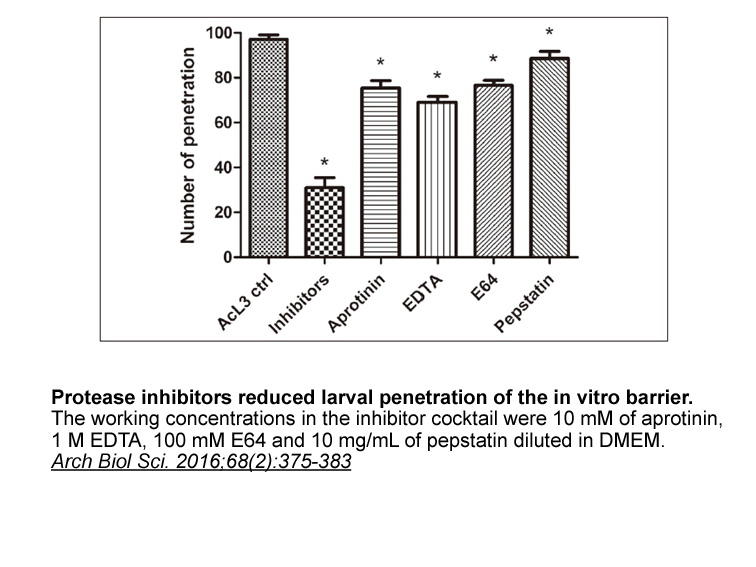
The effect of microtubule inhibitors on HBV infection and replication were reported previously. In the study by Dr. Ai-Long Huang's group, microtubule inhibitors promoted HBV replication in Hep2.2.15 and HepG2-HBV1.1, in which HBV DNA is integrated into the chromosomal DNA (Xu et al., 2015). Integra
-
br Conclusion B esterases and reproductive parameters
2022-06-27
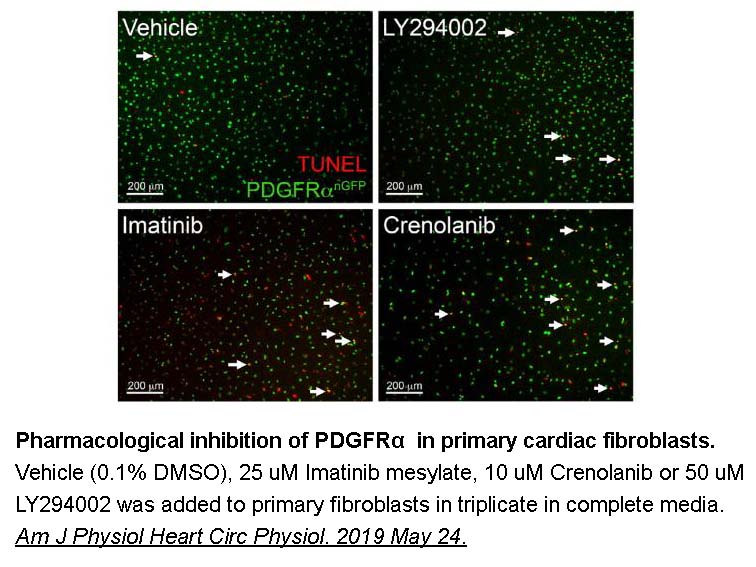
Conclusion B-esterases and reproductive parameters can be used as effect biomarkers of the aquatic contamination with chlorpyrifos. In P. corneus exposed for 14 days to the insecticide, the carboxylesterases determined with p-NFB proved to be the most sensitive biomarker. However, exposure to env
-
Furosemide Ras small GTPases are critical molecular switches
2022-06-27
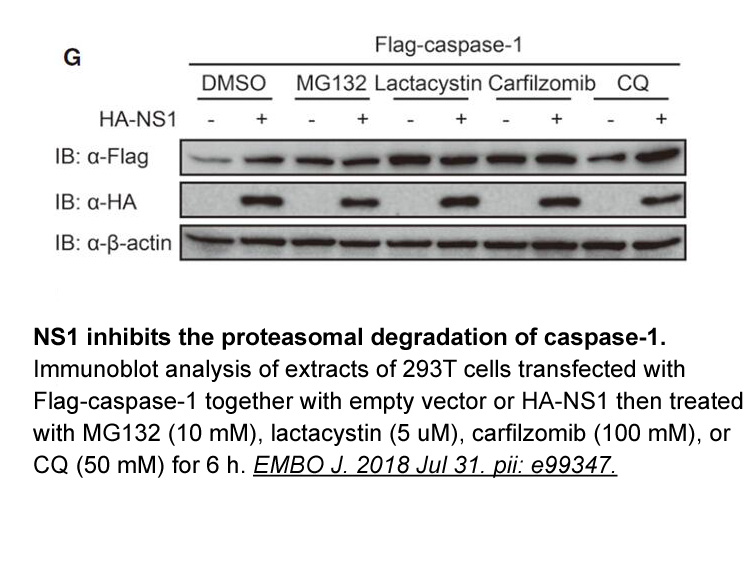
Ras small GTPases are critical molecular switches that connect extracellular signals to intracellular signaling pathways initiated by membrane receptors, such as growth factor receptors and G protein-coupled receptors (Simanshu et al., 2017). When shifting between active GTP-bound and inactive GDP-b
-
In addition during the preparation
2022-06-27
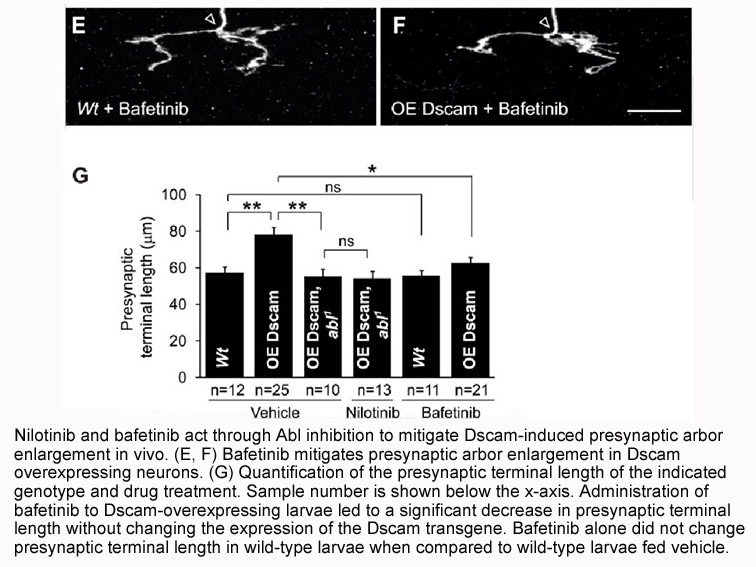
In addition, during the preparation of this manuscript, Oka et al. [7] demonstrated that LPA acts as receptor ligand for GPR35 and that LPA is more potent than KYNA in eliciting a calcium mobilization (EC50: 30nM vs. 39μM for LPA and KYNA, respectively). Other endogenous GPR35 ligands, therefore, mi
-
Ion dependence of mGluRs activity has been
2022-06-24
Ion dependence of mGluRs activity has been previously reported, notably to Ca2+ and Cl− (Kuang and Hampson, 2006). While mGlu1 and mGlu3 receptors were demonstrated to be sensitive to Ca2+, Cl− modulation was reported for all mGluRs, with a lesser extent for the mGlu2 receptor (DiRaddo et al., 2014;
15857 records 424/1058 page Previous Next First page 上5页 421422423424425 下5页 Last page